


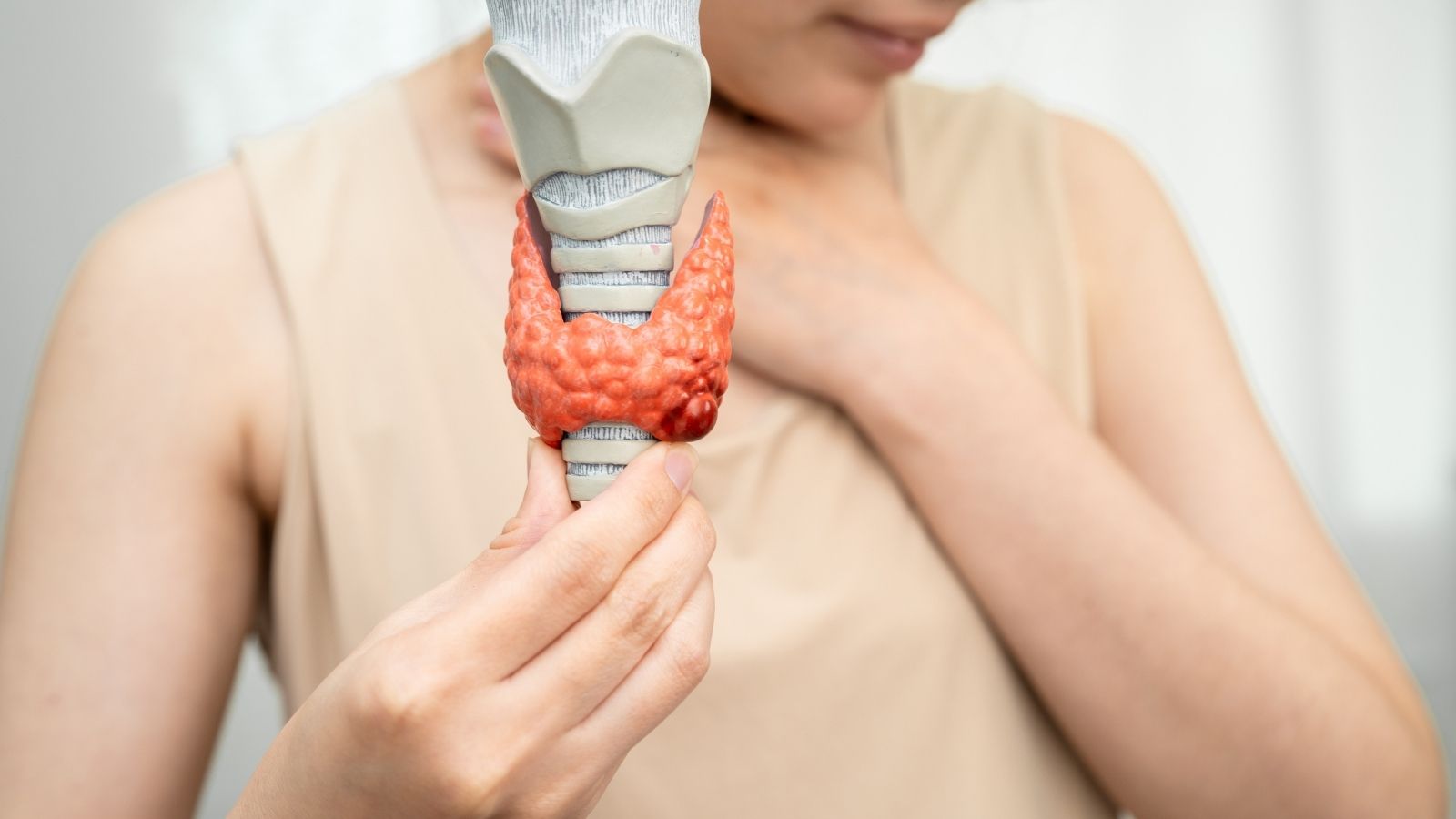
A thyroid nodule is a discrete lesion within the thyroid gland that is radiologically or clinically distinct from the surrounding parenchyma, often detected incidentally during imaging or physical examination and may be benign or malignant in nature.
Thyroid nodule causes and risk factors include iodine deficiency, autoimmune thyroid disease, radiation exposure, and genetic predisposition, with higher prevalence observed in women and older adults, requiring careful clinical and ultrasonographic evaluation.
Thyroid nodule symptoms and clinical presentation vary, as most nodules are asymptomatic, while larger lesions may cause neck swelling, dysphagia, or compressive symptoms, and functional nodules can alter thyroid hormone levels leading to hyperthyroidism.
Thyroid nodule diagnosis and treatment approaches involve ultrasound imaging, fine-needle aspiration biopsy, and risk stratification systems, guiding management strategies that range from active surveillance to surgical intervention depending on malignancy risk.
Why Do Thyroid Nodules Form and Who Are They Seen In?
My patients often ask, “Doctor, what did I do wrong for these nodules to appear?” In fact, there is no single culprit. Our genetic heritage, environmental factors, and lifestyle come together to create this picture. Especially in regions like our country where iodine deficiency is common, the thyroid gland works harder to produce enough hormones for the body. During this intense effort, some areas of the gland enlarge, cluster, and form nodules.
I can say that women are a bit more unfortunate than men in this regard. This is because there is a complex relationship between female hormones such as estrogen and thyroid tissue. Periods of hormonal fluctuation such as pregnancy, childbirth, and menopause can trigger nodule formation. In addition, just as it is natural for our hair to turn gray or our skin to wrinkle as we age, it is also expected that the structure of the thyroid tissue changes and forms nodules.
The main risk factors that predispose to nodule formation are as follows:
- Iodine deficiency
- Genetic predisposition
- Advanced age
- Female gender
- History of radiation exposure
- Smoking
- Obesity
- Hashimoto’s disease
- Insulin resistance
What Are the Symptoms of Thyroid Nodules and What Signals Does the Body Give?
Thyroid nodules generally progress insidiously. Most of the time, our patients become aware of the condition when they visit a doctor for another complaint or when they notice an asymmetry in their neck while looking in the mirror. When nodules are small, they usually cause no complaints. However, when they reach a certain size or begin to produce hormones, your body starts sending you some messages. We can divide these symptoms into mechanical compression symptoms and hormonal symptoms.
Mechanical symptoms occur when the nodule physically enlarges and disturbs surrounding neighboring structures. If it presses on the windpipe, you may experience shortness of breath; if it presses on the esophagus, you may have difficulty swallowing. Our patients often describe this as “There is something in my throat; I swallow but it doesn’t go away.”
If the nodule behaves independently and produces hormones uncontrollably, we call this a “toxic nodule,” or colloquially, “toxic goiter.” In this case, your metabolism accelerates like a race car and the system becomes overloaded.
The hormonal symptoms that may be seen in this situation are as follows:
- Palpitations
- Tremor in the hands
- Excessive sweating
- Sudden weight loss
- Irritability
- Heat intolerance
- Hair loss
- Diarrhea
- Menstrual irregularity
- Insomnia
Diagnostic Process and Biopsy: Does a Thyroid Nodule Carry a Cancer Risk?
When we detect a nodule in your neck, our first task is to determine its identity. Is it an innocent benign structure, or does it have a potential that should concern us? To find the answer to this question, our strongest assistant is ultrasonography. Ultrasound uses sound waves to show us the internal structure, borders, vascularity, and whether the nodule contains calcifications, with millimetric detail. We physicians evaluate these images according to an international risk scoring system called “TI-RADS.”
If we encounter suspicious findings on ultrasound or if the nodule is above a certain size, we need to perform a Fine-Needle Aspiration Biopsy (FNAB) for definitive diagnosis. Although the word “biopsy” may sound frightening, this procedure is actually not very different from having blood drawn from the arm. Under ultrasound guidance, by seeing the tip of the needle on the screen, we take cell samples from the most suspicious area of the nodule. The procedure takes only a few minutes, and since local anesthesia is applied, you do not feel significant pain. This procedure is of vital importance for us to draw the roadmap of treatment. If the result is benign, we take a deep breath; if it comes back malignant, we evaluate surgical options. Remember, 95% of nodules are benign.
Traditional Treatments: Are Surgery and Medication the Only Solutions for Thyroid Nodules?
For many years, medicine’s approach to this issue was quite clear: either follow up or remove it surgically. If the biopsy result indicates cancer or suspicion of cancer, surgery—that is, removal of the thyroid gland (thyroidectomy)—is still the gold standard and must be performed. However, in this group, ablation options have now entered the guidelines for malignant nodules under 2 cm. In nodules that are proven to be benign but bother the patient, making a decision for surgery requires carefully weighing the balance of benefits and risks.
In surgical treatment, part or all of the thyroid gland is removed along with the nodule. This condemns the patient to lifelong use of external hormone medication. Taking medication every morning on an empty stomach, frequently giving blood tests for dose adjustments, and experiencing metabolic imbalances if the medication is forgotten can be exhausting for patients. In addition, every surgery has its own inherent risks; although rare, situations such as hoarseness due to damage to the nerves going to the vocal cords or damage to the parathyroid glands that regulate calcium balance may occur. At this point, the medical world asked itself the following question: “Why are we sacrificing an entire vital organ for a benign piece of tissue?” The answer to this question changed with the development of interventional radiology.
Non-Surgical Treatment: What Is Ablation and How Is a Thyroid Nodule Eliminated?
With the development of technology, “organ-preserving” treatments have come to the forefront. Ablation literally means “destruction” or “elimination.” In these methods that we apply in Interventional Radiology units, the main goal is to destroy only the diseased nodule in place without touching the healthy tissue of the thyroid gland. You can think of it as filling only the decayed tooth instead of extracting all the teeth.
The biggest advantage of these methods is that the thyroid gland continues to function. Since the gland remains in place, hormone production continues and the patient does not become dependent on lifelong medication. In addition, there is no incision scar on the neck, general anesthesia is not required, and there is no need for hospitalization. Our patients can go home walking immediately after the procedure. This comfort and organ-preserving approach represent a revolution in medicine.
The ablation methods we use today are as follows:
- Radiofrequency Ablation (RFA)
- Microwave Ablation (MWA)
- Laser Ablation (LA) (Its effect is quite low)
- Alcohol Ablation (PEI)
Freezing method (very rarely used in the thyroid; a traumatic method for the thyroid region requiring a very thick needle and also an expensive method; it has no superiority over MW and RF and has no usage in world literature for thyroid nodules)
Radiofrequency and Microwave Ablation: How Is Thyroid Nodule Treatment Performed With Heat?
For solid nodules, the most frequently used methods are thermal, heat-based ablation techniques. Radiofrequency (RFA) and Microwave (MWA) ablation are very similar in principle. The technical difference lies in the way the energy is generated, but the result is the same: tissue death through heat.
During the procedure, the patient is awake and can communicate with us. After numbing the neck area with local anesthesia, we enter the nodule with a special needle under ultrasound guidance. The tip of this needle generates high heat inside the nodule. By moving the needle millimeter by millimeter within the nodule, we literally “cook” the nodule from the inside out. The heated nodule cells lose their vitality and die. The body’s immune system gradually clears this dead tissue, allowing the nodule to shrink over time.
These methods are particularly preferred in the following situations:
- Large nodules causing compression
- Swellings causing cosmetic problems
- Overactive (toxic) nodules
- Continuously growing nodules
- Patients who do not want surgery
Alcohol Ablation: What Is the Best Method for Fluid-Filled Thyroid Nodules (Cysts)?
Some nodules are filled with fluid rather than solid tissue. We call these cystic nodules. Even if cystic nodules are drained with a needle, they swell again after a while because the cells on their inner walls continue to produce fluid. You can think of it like a balloon that inflates again even if you deflate it. Alcohol ablation is an excellent option to break this vicious cycle.
In this procedure, we first completely drain the fluid inside the cyst. Then we inject pure medical alcohol into the emptied cavity. Alcohol chemically burns the fluid-producing cells on the cyst wall and causes them to adhere to each other. Thus, the cyst becomes unable to collect fluid again. This method is extremely effective, has a high success rate, and usually a single session is sufficient. Alcohol is not very effective in solid nodules, so we physicians determine the treatment method according to the structure of the nodule (solid or fluid-filled).
Is There Pain During the Procedure and How Long Does Thyroid Nodule Ablation Take?
The biggest concern of my patients is whether the procedure is painful. I assure you that these procedures are much easier than having a dental filling. Before the procedure, we numb the skin of the neck and the thyroid capsule with very fine needles. During the procedure, you may feel a sense of touch or mild pressure, but you will not feel sharp pain. Sometimes our patients may describe a mild, temporary ache radiating to the ear or jaw, which is completely normal.
The duration of the procedure varies depending on the size of the nodule but generally lasts between 10 and 30 minutes. Including the preparation phase and post-procedure ice application, the total time you will spend in the hospital is only a few hours. Since you do not receive general anesthesia, you can stand up immediately after the procedure, eat and drink something, and return home without even needing a companion.
Things to be done before the ablation procedure are as follows:
- Discontinuation of blood-thinning medications
- Arriving with light fullness
- Wearing comfortable clothing
- Bringing previous test results if available
- No jewelry in the neck area
Recovery Process and Results: When Does a Thyroid Nodule Shrink?
Ablation is not a magic wand; the nodule does not disappear as soon as the procedure ends. We kill the nodule; clearing it is the body’s job. Since this is a biological process, it takes time. In the first weeks after the procedure, there may be mild edema (swelling) in the nodule, which is temporary. The actual shrinkage begins after the first month.
Scientific studies and our clinical experience show that about a 50% reduction in nodule volume is seen three months after the procedure. By the end of one year, this rate can reach 80–90%. In other words, a walnut-sized nodule can become the size of a hazelnut or even smaller, no longer visible from the outside and no longer causing compression. In toxic nodules, hormone levels return to normal and the patient can stop taking hyperthyroidism medications.
Things to pay attention to in the post-procedure period are as follows:
- Ice application on the first day
- Use of simple painkillers
- Avoidance of heavy exercise
- Plenty of fluid intake
- Not neglecting doctor follow-ups
Safety and Risks: Does Thyroid Nodule Ablation Damage the Vocal Cords?
Every medical intervention theoretically carries risks, but ablation has a much lower complication rate compared to surgery. The most feared condition is hoarseness, because the nerves that move our vocal cords pass just behind the thyroid gland. However, as Interventional Radiologists, thanks to our mastery of ultrasound, we can clearly see these nerves on the screen.
In risky situations, we apply a special technique called “hydrodissection.” By injecting saline (salt water) or dextrose (sugar water) between the nerve and the nodule, we create an artificial cushion. This water cushion moves the nerve away from the nodule and protects it from heat. In this way, the risk of permanent hoarseness is almost negligible. Rarely, there may be temporary voice changes after the procedure, but these usually resolve spontaneously in a short time. The absence of a permanent scar on the neck, the very low risk of infection, and the low probability of bleeding make this method safer than surgery.
Who Is Suitable for This Treatment: Which Thyroid Nodules Are Treated With Ablation?
Not every nodule is suitable for ablation. Proper patient selection is the key to success. First of all, the benign nature of the nodule must be proven by biopsy. In addition, whether the nodule causes complaints in the patient also affects the treatment decision. Instead of intervening in a small, harmless nodule that remains silent, simple follow-up may be a more appropriate approach.
The patient groups for whom ablation treatment is most suitable are as follows:
Those with a clean biopsy result
Those with a biopsy result of cancer and a mass under 2 cm (lymph nodes must also be negative)
- Those experiencing shortness of breath
- Those with difficulty swallowing
- Those disturbed by neck swelling
- Patients with toxic goiter
- Those who do not want surgery
- Those for whom anesthesia is risky
- Those who do not want a scar on the neck
- Those who do not want to use medication
Frequently Asked Questions
What is a thyroid nodule and how common is it among adults?
What symptoms can indicate the presence of a thyroid nodule?
What are the most common causes of thyroid nodules?
How can doctors determine whether a thyroid nodule is cancerous or benign?
Can thyroid nodules affect hormone production and thyroid function?
When does a thyroid nodule require treatment instead of monitoring?
What treatment options are available for thyroid nodules?
Can a thyroid nodule disappear on its own without treatment?
What are the risk factors for developing thyroid nodules?
What experiences do patients commonly report after thyroid nodule treatment?

Prof. Dr. Özgür Kılıçkesmez is one of Türkiye’s leading interventional radiology and neuroradiology specialists, focusing on minimally invasive endovascular treatments. His primary areas of expertise include aneurysm and stroke treatments, embolization procedures, non-surgical treatments of thyroid and parathyroid diseases, interventional oncology, and peripheral vascular interventions. He currently serves as the Head of the Interventional Radiology and Neuroradiology Department at Istanbul Memorial Göztepe Hospital.
Graduating from Istanbul University Cerrahpaşa Faculty of Medicine in 1997, Prof. Dr. Kılıçkesmez received advanced training in interventional radiology and oncology as a Clinical Fellow at London Guy’s & St Thomas’ and King’s College Hospital between 2012 and 2013. He earned the title of Professor in 2020 and, in the same year, became the Founding Interventional Radiologist at SBÜ Çam and Sakura City Hospital. He also holds the EBIR (European Board of Interventional Radiology) certification.
Prof. Dr. Kılıçkesmez has 94 international and 40 national publications and over 2500 citations. He serves as a reviewer for prestigious journals such as the American Journal of Roentgenology (AJR) and Diagnostic & Interventional Radiology. With his clinical and academic expertise, he is a nationally and internationally recognized authority in stroke treatment, brain aneurysm, embolization, tumor ablation, and minimally invasive treatments of thyroid/parathyroid diseases.




Vaka Örnekleri