


Thyroid disease is a condition in which the endocrine gland located at the front of the neck loses its hormonal production balance or develops structural abnormalities in its tissue. Functional deviations in this organ, which acts as the body’s energy switch, manifest through symptoms such as metabolic slowing that reduces daily quality of life, heart rhythm irregularities, chronic fatigue, and a sensation of physical pressure in the neck. The main underlying pathologies are generally faulty immune system programming, genetic inheritance, and environmental factors. In contemporary treatment approaches, surgery that causes organ loss is now being replaced by advanced non-surgical interventional radiology procedures that target and destroy diseased tissue from within, without incisions or scars, while preserving organ function.
What Is Thyroid Disease?
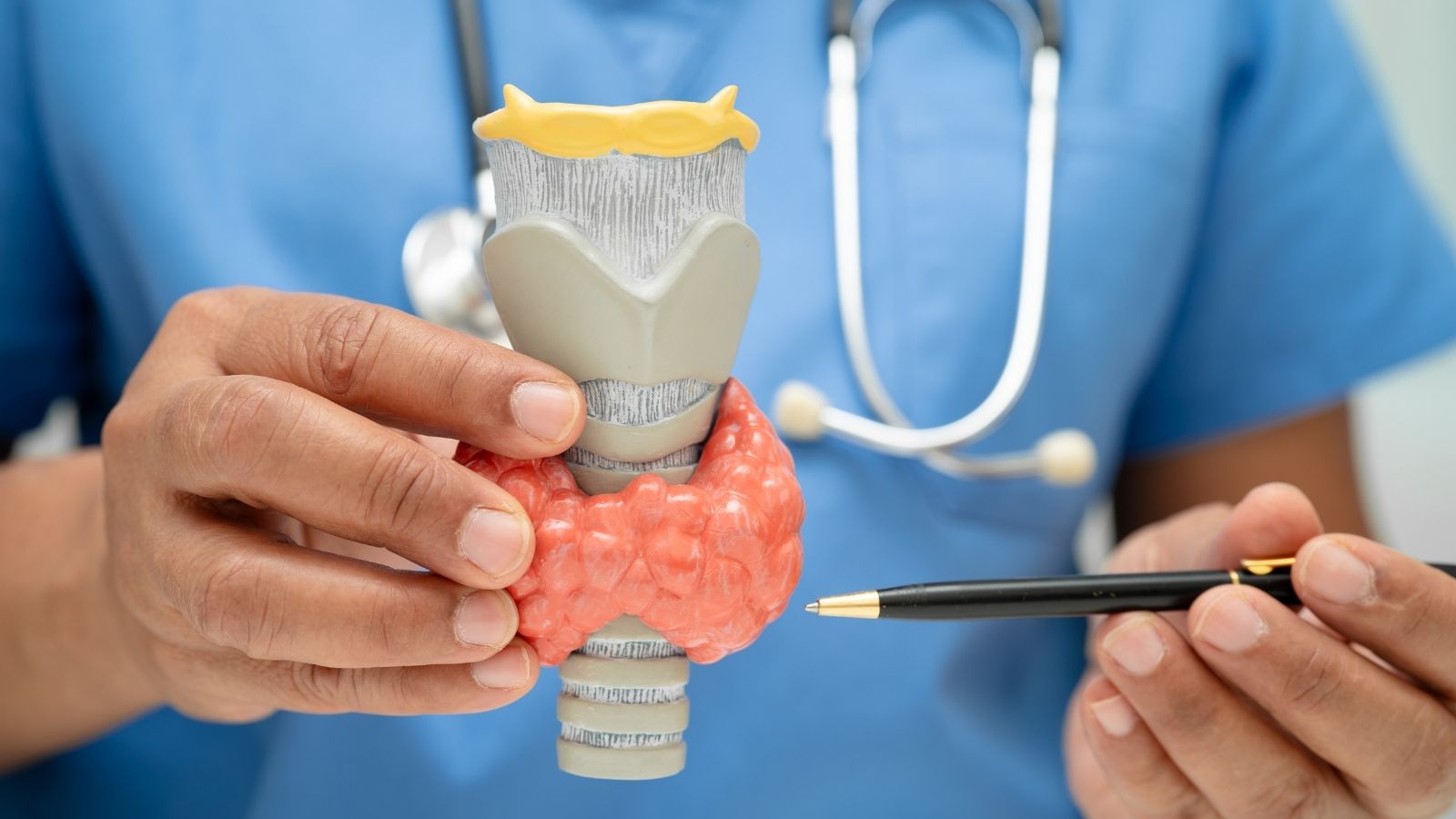
The thyroid gland is a small but vital endocrine gland located immediately in front of the windpipe, below the larynx, and shaped like a butterfly. Its primary function is to produce hormones that determine the working speed of all cells in the body. These hormones tightly control everything from the rate at which consumed food is converted into energy and the number of heartbeats to intestinal movements and regulation of body temperature. If we think of the body as a vast and complex orchestra, the thyroid gland is the conductor of this orchestra. When the conductor slows the rhythm or accelerates it excessively, the harmony of the entire system is completely disrupted. All metabolic processes occurring in the body depend on the balanced production of these hormones. Any disruption in this sensitive system or cellular deterioration within the gland itself creates the general picture of thyroid diseases.
What Causes Thyroid Diseases and What Are Their Types?
It is quite difficult to speak of a single cause in the development of thyroid diseases; the process generally begins when many factors come together. Sometimes the immune system becomes confused and attacks its own healthy tissues, while at other times the dietary habits of the environment in which a person lives create a strong foundation for the disease. These diseases are basically divided into two groups. The first consists of functional diseases in which the working speed of the gland changes, and the second consists of structural diseases in which masses form inside the gland or its size increases. These two conditions may often overlap and create a complex picture.
General causes of thyroid disease include:
- Genetics
- Iodine deficiency
- Environmental factors
- Radiation
- Autoimmunity
What Is Hypothyroidism and What Are the Symptoms of an Underactive Thyroid?
Hypothyroidism, in the simplest terms, is a condition in which the thyroid gland becomes underactive and cannot produce the amount of hormone needed by the body. When there is not enough hormone, metabolism slows down almost like an animal entering hibernation. The most common cause of this slowing is an immune system problem known as Hashimoto’s thyroiditis. In Hashimoto’s disease, the body’s defense cells perceive the thyroid gland as a foreign substance and gradually destroy it. Patients generally state that their life energy has been drained and that no matter how much they sleep, they cannot feel rested. Blood tests generally show a high level of TSH, the stimulating hormone coming from the brain, while the hormones produced by the thyroid itself are quite low.
Common symptoms of an underactive thyroid include:
- Weakness
- Fatigue
- Weight gain
- Constipation
- Depression
- Feeling cold
- Dry skin
- Hair loss
What Is Hyperthyroidism and Which Symptoms Are Seen in Thyroid Patients with Toxic Goiter?
Hyperthyroidism, commonly known as toxic goiter, is a condition in which the thyroid gland becomes overactive and pumps excessive amounts of hormone into the bloodstream. In this condition, metabolism accelerates excessively, and the organs begin to work continuously at high speed without having the opportunity to rest. The most common cause of this condition is Graves’ disease. This time, instead of destroying the gland, the immune system produces antibodies that force it to work continuously. In addition, certain active nodules in the thyroid gland that function independently may also lead to this condition. Patients feel that they cannot stay still and experience constant inner distress and restlessness. Although their appetite is very strong, they lose weight rapidly because the body continuously burns energy.
Common thyroid symptoms in patients with toxic goiter include:
- Palpitations
- Irritability
- Anxiety
- Hand tremors
- Weight loss
- Diarrhea
- Sweating
- Heat intolerance
What Is Euthyroid Goiter and Why Does the Thyroid Gland Enlarge?
Goiter means an increase in the volume of the thyroid gland without any abnormality in hormone levels. When blood tests are examined, the hormones are entirely within normal limits, and this condition is called euthyroid in medicine. If the hormones are normal, why does the gland enlarge so much? The main reason is chronic iodine deficiency. In order to capture the limited amount of iodine in the blood more effectively, the body expands its network by increasing the number and volume of thyroid cells. Sometimes prolonged and excessive consumption of goitrogenic foods such as kale or broccoli may seriously trigger this condition. Since the hormones of patients are normal, they generally do not have metabolic complaints. However, externally visible swelling develops in the front of the neck, and over time this swelling may place pressure on the windpipe.
What Is a Thyroid Nodule and Why Is It Important for Thyroid Health?
A thyroid nodule is the name given to localized lumps or masses formed when thyroid tissue differentiates within itself and can be distinguished from normal healthy tissue by its borders. Nodules may be completely solid structures formed by excessive proliferation of cells, or they may appear as fluid-filled cystic sacs. They are incredibly common in the population, and when examined by ultrasound, there is a possibility of finding a nodule in the thyroid gland of one out of every two people walking down the street. Despite being so common, the most reassuring fact is that the vast majority of these nodules are completely harmless, meaning benign. However, the fact that a small remaining percentage carries a risk of cancer makes it necessary to examine every nodule very carefully. Although benign nodules are harmless, they may also grow over time and cause physical damage to surrounding tissues.
Complaints caused by enlarging thyroid nodules include:
- Difficulty swallowing
- Shortness of breath
- A sensation of something stuck in the throat
- Cough
- Hoarseness
- Neck pain
- Cosmetic swelling
What Are the Symptoms of Thyroid Cancer and When Should a Thyroid Tumor Be Suspected?
Thyroid cancer is the process in which thyroid cells undergo genetic damage, multiply uncontrollably, and develop into a malignant tumor. Compared with many other organ cancers, treatment success is much higher and its progression in the body is much slower. Most of the time, it does not cause any hormonal disorder, and patients feel completely normal and healthy. It is generally detected completely by chance during a routine health examination or while the neck region is being examined for another disease. However, in some cases, it may also produce serious signals that patients can notice themselves. People with a family history of thyroid cancer or those who received radiation therapy to the neck region for any reason during childhood should be much more careful.
Symptoms that require suspicion of thyroid cancer include:
- Rapid growth
- Hard structure
- Immobility
- Lymph node swelling
- Voice changes
- Difficulty swallowing
Which Thyroid Blood Tests Are Requested in the Diagnosis of Thyroid Diseases?
When thyroid disease is suspected in a person, the first step is to perform a detailed laboratory examination with a simple blood sample. At this stage, the main factor being investigated is the production level of the hormones in the blood. Interestingly, in order to understand how the thyroid gland is functioning, a hormone produced by the brain is examined. The pituitary gland in the brain sends a special messenger called TSH to control the thyroid. Even if the level of thyroid hormones in the blood decreases slightly, the brain immediately notices the situation and increases the amount of TSH tremendously to make the thyroid work harder. In the opposite situation, if the thyroid is working excessively, the brain applies the brakes and reduces TSH production to almost zero. Thanks to this flawless communication network, a very clear understanding of the patient’s hormonal status is obtained.
The basic blood tests used in thyroid diagnosis include:
- TSH
- Free T4
- Free T3
- Anti-TPO
- Anti-TG
- Calcitonin
Why Is Thyroid Ultrasound the Most Important Step in Thyroid Diseases?
Blood tests only indicate how much the thyroid gland is working, but they provide no anatomical information about the internal structure, shape, and tissue of the gland. This is where ultrasonography, medicine’s greatest tool in the diagnostic process of thyroid diseases, comes into play. Ultrasound is an extremely safe and detailed imaging method that does not involve radiation and works entirely with sound waves. With the help of gel applied to the neck and a special probe, the thyroid gland is examined millimeter by millimeter. Whether a nodule is present, and if so, its size, internal structure, and most importantly whether it carries a suspicion of cancer can be understood only with ultrasound. Even if a mass is incidentally seen on other medical imaging examinations, the final diagnostic decision is always made with a high-quality ultrasound examination.
The features evaluated during ultrasound examination of nodules include:
- Echogenicity
- Border regularity
- Internal structure
- Vascularization
- Calcification
- Direction of growth
What Is Thyroid Scintigraphy and in Which Thyroid Patients Is It Performed?
Scintigraphy is a special nuclear medicine imaging method that maps the cellular activity of thyroid tissue. It is not routinely performed in every thyroid patient. It is generally requested to identify the main source of the problem in patients whose blood tests show a low TSH level, meaning hyperthyroidism. During the procedure, the patient is given a very low and safe dose of radioactive material through a vein. This material is taken up by the thyroid gland, and the neck region is imaged with special cameras. This method clearly shows whether the nodules inside produce more hormone than the surrounding tissue or remain completely inactive. Certain thyroid medications used before the procedure must be discontinued under medical supervision.
What Is Fine-Needle Thyroid Biopsy and Why Is It Performed for a Thyroid Nodule?
When a nodule that appears suspicious on ultrasound, has irregular borders, or contains fine calcifications is detected, there is only one scientific way to determine with certainty whether it is benign or malignant. This method is ultrasound-guided fine-needle aspiration biopsy. The procedure is performed with great precision while interventional radiology specialists follow the image on the ultrasound screen in real time. Since the skin is numbed with a very fine needle, the process is painless. Critical structures such as the carotid artery or windpipe are carefully protected by viewing them on the screen, and a cell sample is collected by directly reaching the center of the nodule with the needle. In most cases, the quality of the cell sample is immediately confirmed under a microscope by a pathology specialist present in the room.
Is Thyroid Biopsy Safe During Pregnancy in Thyroid Disease?
During pregnancy, tremendous hormonal changes occur in women’s bodies. These changes may directly affect the thyroid gland, causing existing nodules to grow rapidly or entirely new nodules to appear even when none were previously present. If a suspicious thyroid mass is detected on ultrasound in a pregnant woman, the approach is no different from that used in a non-pregnant individual. Since no harmful rays, X-rays, or radiation are used during the biopsy procedure, it causes no harm to the baby in the womb. Because it is performed under ultrasound guidance using only sound waves and no heavy anesthetic medications are administered into the bloodstream, it can be applied comfortably and with a very high level of safety during every stage of pregnancy, from the first months to the final months.
What Non-Surgical Treatments Does Interventional Radiology Offer for Thyroid Disease?
For many years, the only solution for a problematic or enlarging thyroid nodule was to cut the patient’s throat and surgically remove part or all of the thyroid gland. However, with the rapid advancement of modern medicine, interventional radiology has completely changed this established approach. High-technology non-surgical methods are now used to destroy diseased tissue by entering through only a needle puncture, without general anesthesia or any incision in the neck. The main philosophy of these procedures is to destroy only the localized nodule harming the patient from within, without ever touching the healthy and normally functioning thyroid tissue.
The main non-surgical thyroid treatments used include:
- Radiofrequency
- Microwave
- Ethanol
How Is Non-Surgical Thyroid Nodule Treatment Performed with Radiofrequency Ablation (RFA)?
Radiofrequency ablation is a revolutionary method that is the most frequently used and has the highest reliability in the non-surgical treatment of thyroid nodules worldwide and in our country. It is performed entirely under local anesthesia while the patient remains awake during the procedure. After the interventional radiologist determines the exact location of the nodule with millimetric precision using ultrasound, a special conductive needle is placed at the very center of the nodule. When the device is activated, an alternating electrical current is transmitted into the nodule through the tip of this needle. This current causes the ions inside the cells to vibrate at a very high speed, and this vibration creates intense frictional energy, similar to the heat produced when hands are rubbed together. The inside of the nodule is heated in a controlled manner, causing the diseased tissue in that area to effectively cook within itself, lose its vitality, and rapidly begin to dry out.
In Which Thyroid Patients Is Microwave Ablation (MWA) Preferred?
Although microwave ablation technology is very similar to radiofrequency, it works differently in terms of the way heat is generated and its power. In this system, electromagnetic waves are delivered directly into the tissue through the tip of the needle. These waves target the water molecules inside the nodule and cause them to rotate around themselves at an extremely high speed. This movement releases very powerful thermal energy in a very short time. The greatest advantage of microwave treatment is that heat can spread much more rapidly and over a wider area within the nodule. Therefore, the microwave method produces much more effective results in very large solid nodules that are more difficult to treat or in large complex nodules containing both fluid and solid tissue.
How Does Percutaneous Ethanol Ablation (Alcohol Treatment) Work in Thyroid Cysts?
If the mass formed in the patient’s thyroid consists largely of fluid rather than solid cells, alcohol treatment, which is a chemical drying method, is applied instead of heat-based methods. These cysts continuously secrete fluid into themselves and grow. Simply draining the fluid with a needle does not work because the living cells in the wall of the cyst reproduce that fluid within a few weeks. The interventional radiology specialist first drains all the fluid inside the cyst. Then, highly purified medical ethyl alcohol is injected into that cavity. The alcohol draws the water out of the membrane cells that produce the fluid, instantly drying them and irreversibly disrupting their protein structures. In this way, the cyst can no longer collect fluid and permanently disappears by shrinking.
How Are Surrounding Tissues Protected During Non-Surgical Thyroid Treatments?
The neck region is like a dense highway that is very narrow and filled with important organs. Immediately adjacent to the thyroid gland are the carotid artery that carries blood to the brain, very sensitive nerves that operate the vocal cords, and the esophagus. Protecting these surrounding tissues from heat while the nodule is being destroyed internally at a high temperature is the most critical task. For this purpose, two special safety protocols are used with great skill. The first is to inject cold glucose solution with a thin needle between the nodule and the vocal nerve, creating a fluid shield that does not transmit heat. The second is the moving-shot technique. The needle is placed at the deepest part of the nodule and gradually withdrawn millimeter by millimeter while the nodule is treated in small layers. In this way, the heat does not spread outward uncontrollably and remains only within the targeted nodule tissue.
Which Thyroid Diseases Are Suitable for Non-Surgical Thyroid Treatment?
These modern methods are not applied to every patient or every detected nodule. The success of treatment depends entirely on selecting the right patient with great care. The most suitable candidates are individuals with nodules proven definitively benign by biopsy but which continue to grow and cause cosmetic and physical discomfort. They are also successfully applied in certain small papillary thyroid cancers in patients with a high surgical risk and in patients who have previously undergone surgery but developed recurrent cancerous lymph nodes in the neck. In this way, patients are spared a second risky operation.
Thyroid patient groups suitable for non-surgical treatment include:
- Growing benign nodules
- Indeterminate atypical nodules
- Small papillary cancers
- Recurrent lymph nodes
- Hot toxic adenomas
Which Thyroid Conditions Are Not Suitable for Non-Surgical Thyroid Treatments?
Although it is a safe and comfortable treatment option, the use of these ablation methods is considered inappropriate in certain specific situations and is definitely not recommended for patients. In particular, if the patient has not previously undergone a detailed biopsy and the genetic and structural characteristics of the cells inside are unknown, the ablation procedure cannot be performed under any circumstances. Similarly, benign and harmless nodules that cause no physical discomfort, are not externally visible, and are still very small are not treated unnecessarily.
Situations in which non-surgical procedures cannot be applied include:
- Nodules without biopsy
- Small asymptomatic nodules
- Hashimoto’s disease
- Severe clotting disorders
- Goiters extending into the chest cavity
What Are the Advantages of Non-Surgical Thyroid Treatment Compared with Conventional Surgery?
In conventional open surgeries, because part or all of the thyroid organ is removed from the body, patients unfortunately become unable to produce their own hormones. This causes them to use synthetic hormone pills every morning for the rest of their lives. In interventional ablation methods, however, the healthy tissue of the thyroid is not damaged in any way, so the organ continues to perform its function without problems, and the need for lifelong medication is completely eliminated. The risks of very serious complications such as accidentally cutting the vocal cord nerve during surgery or damaging the glands that regulate calcium are close to zero in non-surgical treatments. Since no scalpel is used on the neck and no stitches are placed, no surgical scar remains after the procedure.
The prominent advantages of ablation treatment include:
- Preservation of the organ
- Elimination of medication dependence
- No risk of voice loss
- No low calcium levels
- No incision scar
- Same-day discharge
What Is the Recovery Process Like After Non-Surgical Thyroid Treatment?
When the procedure is completed, the treated nodule does not instantly evaporate and disappear; it is only destroyed from within and transformed into a lifeless mass of dead tissue. The real miracle begins within the first few months after the procedure through the body’s own healing mechanism. Immune system cells called macrophages, which act as the body’s cleaning workers, immediately recognize this destroyed dead tissue. Over the course of months, they slowly consume, dissolve, and absorb this tissue, removing it naturally from the body. This dissolution process progresses quite systematically and slowly. Cellular destruction that begins in the first month results in a visible reduction of neck swelling by the third month. By the sixth month, all physical complaints such as shortness of breath and difficulty swallowing disappear, and the neck completely returns to its previous form. At the end of the first year, only a tiny, harmless trace that can barely be detected even on ultrasound remains from those enormous nodules.




Vaka Örnekleri