


A biopsy result is usually announced within 4 to 10 days. The duration depends on the type of tissue sample taken, the scope of the pathological examination performed, and the need for additional tests. While routine histopathological evaluations are completed in a shorter time, advanced analyses may prolong the process.
The question of how many days it takes for a biopsy result to come out depends on the organ from which the sample was taken and the laboratory workflow. Small and superficial tissue samples are often reported within a few days. However, in cases requiring immunohistochemistry or molecular testing, the examination period may extend to 1–2 weeks.
The issue of why a pathology report is delayed is related to technical and medical requirements. Tissue processing, staining procedures, and microscopic evaluation go through specific stages. The need for additional sections or a second expert opinion to clarify the diagnosis may extend the reporting time.
Factors affecting the biopsy result include the workload of the hospital, public holidays, and the need for additional tests. Especially in cases with suspected cancer, a detailed examination is performed. The process must be completed to ensure a definitive and reliable diagnosis.
How many days does it take for a biopsy result to come out?
In general, biopsy results are reported within 4 to 10 days. However, this period is not fixed. While results from a simple skin biopsy may be available within a few days, biopsies of the breast, thyroid, prostate, or internal organs may take a little longer.
In the pathology laboratory, the tissue sample goes through specific stages. First, the sample is preserved in special solutions through a process called “fixation.” Then it is embedded in paraffin blocks, very thin sections are prepared, and stained with special dyes (such as hematoxylin-eosin) before being examined under a microscope. This technical process alone may take several days.
If additional tests are needed, the result time may be extended.
Factors affecting the duration of the result
The time required to announce a biopsy result depends on many variables:
1. Type of biopsy
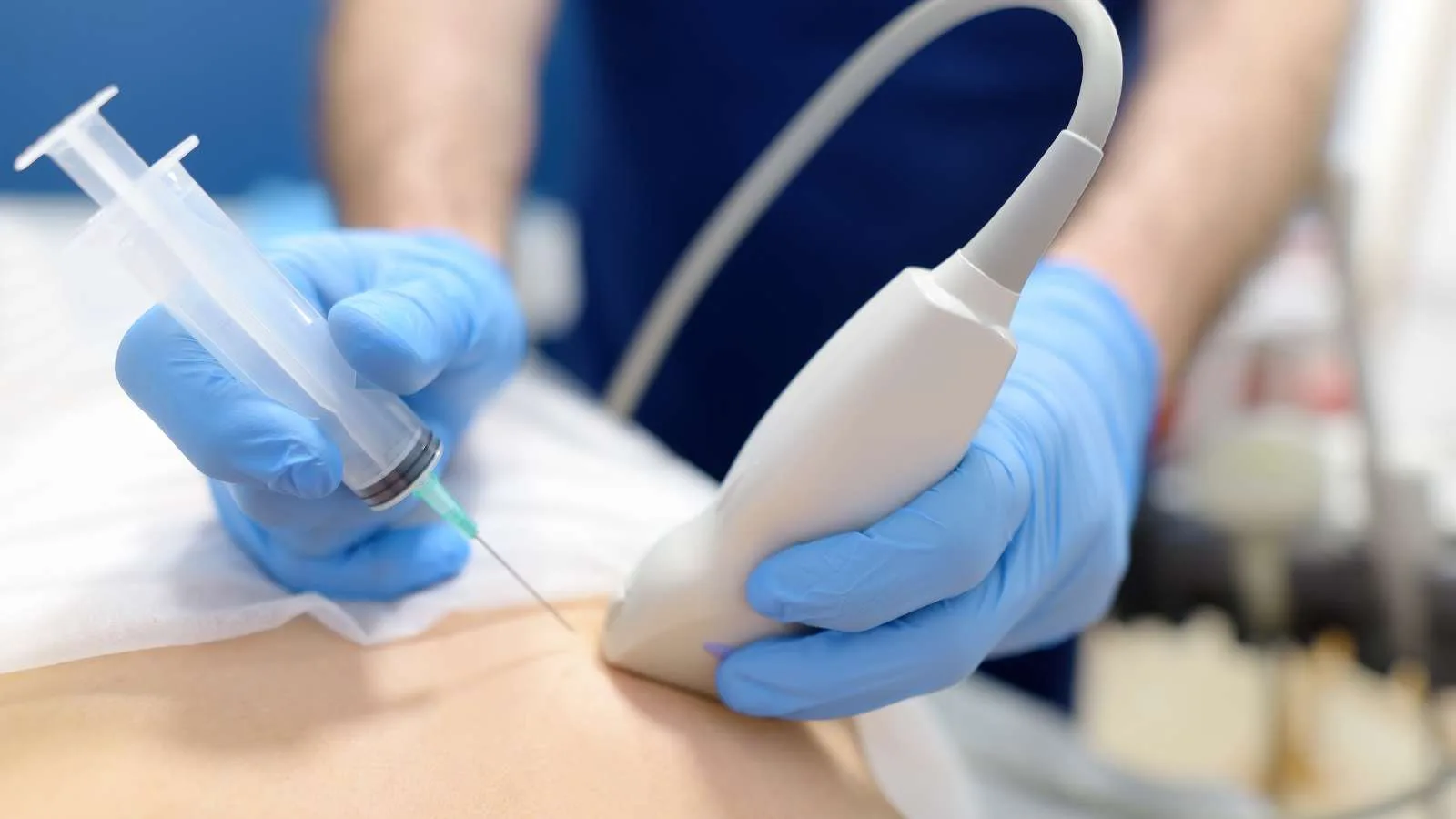
- Fine needle aspiration biopsy (FNAB): Since the examination is performed at the cellular level, it usually yields faster results.
- Core needle (tru-cut) biopsy: Requires more detailed analysis as the tissue architecture is evaluated.
- Surgical (excisional or incisional) biopsy: May take longer to examine due to containing a larger tissue sample.
2. Additional pathological examinations
In some cases, standard microscopic examination is not sufficient. The following methods may be applied to clarify the diagnosis:
- Immunohistochemistry (IHC): Allows detection of specific proteins on the cell surface. It is especially important in distinguishing cancer types.
- Molecular pathology tests: Performed to investigate genetic mutations.
- Frozen section examination: Provides rapid preliminary evaluation during surgery, but the final report is prepared later.
These advanced analyses may require additional time ranging from a few days to several weeks.
3. The organ from which the sample is taken
Evaluation of tissues from certain organs may be more complex. For example:
- In bone biopsies, decalcification (removal of calcium) is required, which prolongs the process.
- In lymph node biopsies, if lymphoma is suspected, detailed immunostaining is performed.
- In prostate biopsy, multiple sample pieces are examined separately.
4. Laboratory workload and technical processes
Factors such as the workload of pathology laboratories, public holidays, or sending advanced tests to other centers may also affect the result.
What happens when the pathology report is ready?
The biopsy result is usually prepared as a written pathology report. This report includes:
- Macroscopic findings (evaluation with the naked eye),
- Microscopic findings,
- If present, the grade of the tumor,
- Characteristics of spread,
- Preliminary or definitive diagnosis
.
The medical terms used in the report may be complex for patients. For example, “benign” means non-cancerous, while “malignant” means cancerous. “Dysplasia” refers to structural abnormalities in cells, and “inflammation” refers to an inflammatory process. Therefore, the result must be evaluated by the relevant physician. The pathology report should not be interpreted on its own.
Should you be concerned if the result is delayed?
A delay of a few days in the result does not always indicate a negative situation. On the contrary, in some cases, the pathologist requesting additional stains to confirm the diagnosis indicates a more careful evaluation. Especially in oncological (cancer-related) biopsies, detailed analysis is preferred because determining the subtype is critical for treatment planning.
However, if the expected duration is significantly exceeded, it may be appropriate to contact the healthcare institution where the procedure was performed.
How does the process proceed after the biopsy result is announced?
If the result is “benign,” follow-up or simple treatment methods are usually considered. If a “malignant” condition is present, the patient is referred to the relevant specialty (such as oncology, general surgery, hematology).
At this stage:
- Additional imaging methods (CT, MRI, PET-CT),
- Blood tests,
- Staging studies
may be required. However, the process differs for each patient. The treatment plan is individualized by considering many factors such as the patient’s age, comorbidities, the type of tumor, and its spread.
How can the waiting period be managed psychologically?
Waiting for a biopsy result can be anxiety-inducing for many people. The feeling of uncertainty may increase stress hormone levels. During this period:
- Turning to reliable sources of information,
- Avoiding unverified content on the internet,
- Maintaining communication with the doctor,
- Seeking psychological support if necessary
may be helpful.
It should not be forgotten that a biopsy does not always mean cancer. Many biopsy results turn out to be benign pathologies. However, a definitive evaluation can only be made through pathological examination.

Prof. Dr. Özgür Kılıçkesmez is one of Türkiye’s leading interventional radiology and neuroradiology specialists, focusing on minimally invasive endovascular treatments. His primary areas of expertise include aneurysm and stroke treatments, embolization procedures, non-surgical treatments of thyroid and parathyroid diseases, interventional oncology, and peripheral vascular interventions. He currently serves as the Head of the Interventional Radiology and Neuroradiology Department at Istanbul Memorial Göztepe Hospital.
Graduating from Istanbul University Cerrahpaşa Faculty of Medicine in 1997, Prof. Dr. Kılıçkesmez received advanced training in interventional radiology and oncology as a Clinical Fellow at London Guy’s & St Thomas’ and King’s College Hospital between 2012 and 2013. He earned the title of Professor in 2020 and, in the same year, became the Founding Interventional Radiologist at SBÜ Çam and Sakura City Hospital. He also holds the EBIR (European Board of Interventional Radiology) certification.
Prof. Dr. Kılıçkesmez has 94 international and 40 national publications and over 2500 citations. He serves as a reviewer for prestigious journals such as the American Journal of Roentgenology (AJR) and Diagnostic & Interventional Radiology. With his clinical and academic expertise, he is a nationally and internationally recognized authority in stroke treatment, brain aneurysm, embolization, tumor ablation, and minimally invasive treatments of thyroid/parathyroid diseases.





Vaka Örnekleri