


Varicocele is the abnormal enlargement and twisting of the venous network (pampiniform plexus) surrounding the testicles, in simple terms, a varicose formation occurring within the scrotum. This vascular problem makes it difficult for deoxygenated blood to return to the heart, increases the sensitive temperature of the testicles, and is one of the most common yet successfully treatable causes of male infertility. Characterized by the pooling of blood in the veins, this condition directly threatens sperm quality and testicular health over time. Thanks to interventional radiological solutions offered by modern medicine, reproductive health can be permanently preserved by intervening through the vessels without the need for surgical procedures.
What is Varicocele and How Has It Been Defined Throughout History?
Tracing the history of this vascular enlargement takes one surprisingly far back. This structural difference, which attracted the attention of physicians even in times when modern medical devices did not exist, was described in detail with physical depictions in the records of the famous Roman physician Celsus, who lived in the first century AD. Even more interestingly, one of the most important figures in Anatolian medical history, Şerefeddin Sabuncuoğlu, introduced this condition into the literature under the name “devali” in his unique medical work Cerrahiyet’ül Haniyye, written in 1483. Sabuncuoğlu observed the enlarged and twisted vascular bundles in the scrotum while examining patients and described this structure with remarkable accuracy and artistry by comparing it to a “bunch of grapes” on a vine. Today, this condition is examined much more deeply, not only as a deformity detectable by touch but also as a systemic circulatory problem that causes tissue damage at the microscopic level.
Why is Varicocele Frequently Seen on the Left Side and Whom Does It Affect?
It is a statistical fact that this condition is much more common in society than generally assumed. Approximately twenty out of every hundred adult men walking on the street have this vascular enlargement in some form. However, the most striking picture emerges during the process of having children. It appears as the primary cause in nearly half of men who have difficulty becoming fathers and apply with complaints of infertility, while this rate reaches much higher levels in men who have previously had children but are unable to have more later on.
Anatomically, the fact that the problem occurs in the left testicle in the majority of patients is not a coincidence at all; it is entirely related to the vascular architecture of the human body. The main vein carrying deoxygenated blood from the left testicle extends upward like a vehicle climbing a steep hill and must connect to the left renal vein at a right angle. When the relentless pressure of gravity, this perpendicular connection angle, and the insufficiency of the protective valves within the vein come together, the blood struggles to ascend and pools backward. On the right side, however, the vein drains much more easily at a gentle, horizontal angle directly into the body’s largest main vein, making such pooling quite rare on that side.
What Physical Symptoms Indicate Varicocele?
This circulatory problem usually progresses very insidiously. Since it often causes no noticeable discomfort, individuals typically become aware of it only during a routine medical check-up or during investigations for infertility. However, when symptoms do appear, a chain of characteristic complaints that significantly reduce quality of life emerges. While no problem is usually felt upon waking in the morning, standing for long periods during the day, working immobile at a desk, or engaging in heavy physical effort increases pressure in the area. As blood accumulates within the veins, a dull, aching pain begins in the scrotum, causing discomfort. When lying on the back and resting, the effect of gravity disappears, the blood in the veins drains rapidly, and this pain miraculously decreases or disappears completely. In advanced stages, patients may notice the twisted veins under the skin, which feel like a soft mass when touched, while bathing or dressing and examining their own bodies.
The main physical complaints frequently expressed by patients in daily life are:
- Dull pain
- Feeling of fullness
- Heaviness
- Scrotal swelling
- Visible veins
How Does Varicocele Affect Testicular Functions and Fatherhood?
The damage caused by enlarged veins filled with pooled blood to testicular tissue and sperm quality does not occur through a single mechanism. It is a highly complex and multi-layered process of cellular deterioration that triggers itself. The fundamental problem is venous reflux, where blood flows backward toward the testicle instead of moving forward and becomes trapped there. This reverse flow greatly increases hydrostatic pressure in the capillaries surrounding the testicle. The testicles require an extremely sensitive working environment, an ideal microenvironment, for sperm production. The stagnation of blood here begins to disrupt this smoothly functioning system at its core. Not only does sperm count decrease, but the motility and structural integrity of the produced sperm also gradually deteriorate under these harsh conditions.
How Does Temperature Increase Impair Sperm in Varicocele?
In the design of the male body, there is a vital biological reason why the testicles are located outside the abdominal cavity, within a special sac called the scrotum. For perfect and healthy sperm production to occur, the testicles must always be in an environment three to four degrees cooler than the general body temperature. However, the pooled, high-temperature deoxygenated blood that comes from inside the body and cannot be removed begins to act like a warm “radiator” or “heating pad” around the testicle. This chronic heating condition (hyperthermia) halts the functioning of special enzymes that are vital for the development of sperm cells. Young reproductive cells exposed to high temperatures die before maturing, and the production line in the sperm factory suffers severe damage. Modern medicine’s precise temperature measurements have clearly proven that even a one-degree temperature difference between the two testicles is sufficient to disrupt this microscopic production process.
How Do Oxidative Stress and Toxic Substances Increase Varicocele Damage?
In addition to the increase in temperature, the stagnation of blood in the area throughout the day causes the testicular tissue to be deprived of fresh oxygen (hypoxia). When oxygen-deprived cells begin to struggle, harmful free radicals called “reactive oxygen species” accumulate in the tissue. You can think of these free radicals as a kind of cellular “rust” that corrodes a metal pipe from the inside. This rusting effect damages the outer protective membrane of sperm and paralyzes tail movements, eliminating their ability to swim toward the egg. The most destructive effect occurs in the sperm nucleus; the DNA strands carrying the genetic code are broken and damaged. A sperm cell with such fragmented DNA, even if it appears completely normal under a microscope and moves by beating its tail, unfortunately loses its ability to fertilize an egg and form a healthy embryo.
How is Hormonal Balance Affected by the Presence of Varicocele?
The sole function of the testicles is not only to produce sperm, the reproductive cell. They are also the only center where testosterone, the main driving force of male metabolism, is secreted. High pressure, chronic temperature increase, ongoing oxygen deprivation, and the long-term accumulation of unremoved toxic substances gradually impair the structural functioning of the specialized “Leydig cells” responsible for testosterone production. This condition can lead to imbalances in hormone levels in the blood in the long term. More importantly, testicular tissue that has been poorly nourished, deprived of oxygen, and continuously under pressure for years may undergo cellular loss, gradually shrink, and decrease in volume (atrophy).
How is Varicocele Examined and What Are the Stages of the Disease?
The first and most critical step for accurate diagnosis is a comprehensive examination performed under appropriate physical conditions. This evaluation must be carried out in a warm room at body temperature. In a cold environment, the skin reflexively contracts and hides the underlying vascular enlargements like armor, leading to misleading results. Additionally, standing is essential to clearly observe the pooling of blood due to gravity. During the examination, coughing or straining maneuvers are performed to increase intra-abdominal pressure and fill the veins with blood. Based on this evaluation, the disease is classified into specific stages according to its severity. In the first stage, no abnormality is visible externally, but the filling of veins can be felt during strong straining. In the second stage, enlarged veins can be easily detected by the doctor’s fingertips without the need for straining. In the third and most advanced stage, the veins can be clearly seen under the skin like a tangled bundle of cables without any need for touch. In some cases, nothing can be physically detected, but hidden enlargements are identified during infertility investigations.
The names of the clinical stages used in medical evaluation are:
- Grade I
- Grade II
- Grade III
- Subclinical
Why is Ultrasonography Very Important in the Diagnosis of Varicocele?
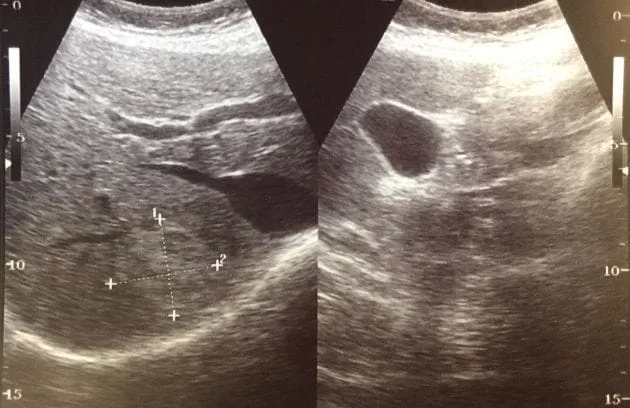
No matter how meticulous a manual examination is, skin thickness or anatomical differences can sometimes make it difficult to reach a definitive conclusion. Therefore, in modern medicine, “Color Doppler Ultrasonography” devices are considered the gold standard to confirm the diagnosis, measure vein diameters in millimeters, and guide treatment decisions. The examination must be performed not only while lying down but also while standing to reveal the true picture. There are two main criteria targeted on the ultrasound screen. The first is the diameter of the veins; if these veins, which should normally be very thin, exceed two or three millimeters, it is an alarm signal. The second and much more critical is the real-time observation of blood flow direction using “color mode.” If it is observed on the screen that blood, which should normally flow upward in a single direction, refluxes toward the testicle during straining and that this reverse flow continues for a long time, the disease is definitively confirmed. Additionally, ultrasound allows measurement of the volume of both testicles, clearly revealing whether there is any shrinkage or atrophy on the affected side.
How is Venography, an Advanced Mapping Method, Used for Varicocele?
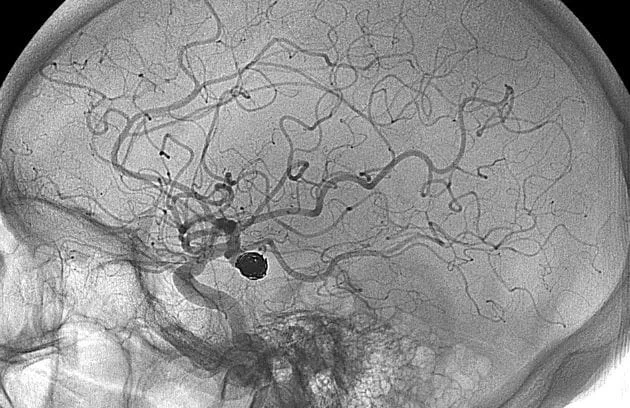
Among diagnostic methods, the most definitive and least error-prone imaging technique is venography. However, since this procedure requires the administration of special agents into the veins, it is not routinely used as a diagnostic tool in outpatient settings. Venography is mostly applied simultaneously with treatment during embolization, a modern treatment method, to create a complete map of the enlarged venous network. Capillary side branches that even ultrasound cannot detect, extending deep within the body, become visible on a large screen thanks to this contrast mapping. Thus, the source of the problem is fully illuminated without missing even the smallest detail, and the intervention is performed with complete precision.
Should Everyone Diagnosed with Varicocele Be Treated?
While in the past there was a widespread belief that “everyone with vascular enlargement should be urgently operated on,” this rigid approach has been completely abandoned in light of current scientific data. A man with vascular enlargement but no pain and excellent sperm parameters does not need unnecessary treatment. There are very clear and strict rules established by international medical associations to decide on treatment. The patient’s current condition must meet at least one of these criteria to justify the necessity and success of medical intervention.
The main medical conditions requiring treatment are:
- Infertility
- Low sperm quality
- Progressive testicular shrinkage
- Severe scrotal pain
- Developmental delay
What Risks Do Open Surgical Methods Carry in Varicocele Treatment?
The most common traditional treatment method applied for years involves making an incision in the groin area with a scalpel, passing through the underlying muscles, and tying and cutting the testicular veins with surgical sutures. Although modern microsurgical techniques have increased success rates, every open surgical procedure inherently carries its own challenges and risk of complications. The greatest difficulty faced by the surgeon is that the problematic veins that need to be tied are intertwined like a braid within the same sheath as the arteries bringing clean blood to the testicle and the lymphatic channels. Within the limits of the human eye or surgical microscope, sometimes transparent lymphatic channels may be accidentally tied. In such cases, fluid around the testicle cannot drain and serious fluid accumulation (hydrocele) may develop over time. A much more dangerous scenario is damage to the artery that is the lifeline of the testicle, which may result in complete loss of its blood supply.
Possible medical risks associated with surgical operations are:
- Hydrocele
- Atrophy
- Arterial injury
- Wound infection
- Bleeding
How is Embolization, a Non-Surgical Treatment for Varicocele, Performed?
Thanks to the remarkable advancement of medical technology, there is now a highly refined and modern treatment alternative that does not require a scalpel, sutures, or general anesthesia. This method, called embolization, is performed in specialized units equipped with advanced angiography devices. There is no need to put the patient to sleep; only the entry point of the needle is locally anesthetized. A very thin tube (catheter), about one millimeter thick and as flexible as spaghetti, is inserted into the main vein from the neck or groin region. Using the body’s vast vascular network, the catheter is advanced entirely from within, without damaging any external tissue, directly to the center of the problematic vein leading to the testicle. After real-time mapping is performed, this faulty vein is sealed and deactivated from within. The deoxygenated blood from the testicles is then immediately redirected to surrounding healthy veins with functional valves, allowing normal and healthy circulation to continue.
What Materials Are Used to Close Varicocele Veins During Embolization?
To permanently deactivate the damaged and enlarged vein, physicians use various microscopic occlusive materials appropriate to the current diameter of the vein, the intensity of blood flow, and the patient’s anatomical structure. Sometimes a single metal coil is sufficient, while in other cases a medical foam that shrinks the vein successfully completes the procedure.
Medical occlusive agents used inside the vein during the procedure are:
- Coils
- Sclerosing agents
- Foam agents
- Tissue adhesives
What Are the Advantages of Varicocele Embolization Performed with Interventional Radiology?
The absence of any external incision is the greatest and most unique strength of this modern method. The risk of accidentally cutting the artery that nourishes the testicle or damaging lymphatic channels causing hydrocele, which are the biggest fears in surgical operations, is zero in the embolization method. Because all procedures are performed within the protected inner surface of the vessel, behind closed doors; the surrounding external tissues are never touched. Additionally, in some varicocele patients, the problem exists in both the right and left testicles simultaneously. While surgical procedures require separate incisions for each side, embolization allows access to both sides through a single millimetric needle entry in the same session.
The main medical advantages offered by this modern method are:
- Incision-free procedure
- Suture-free tissue integrity
- Comfort of local anesthesia
- Rapid recovery
- Zero risk of hydrocele
- Preserved arterial structure
Why is Varicocele Embolization Preferred in Recurrent Disease?
In some cases, despite undergoing open surgery, the disease may recur (recurrence) due to the regrowth of overlooked small veins over time. The groin area where the initial surgery was performed becomes hardened due to the natural healing process, tissues adhere to each other, and anatomical boundaries become obscured. Performing a second surgical operation in this scarred area significantly increases the risk of arterial damage. However, the embolization method is not affected by these adhesions. Since it approaches the problem from a distant entry point through the main vascular pathway and reaches it from within, the scars left by the previous surgery do not interfere with the procedure at all. Therefore, embolization is undoubtedly the safest treatment option for recurrent cases.
How Does the Recovery and Pregnancy Process Proceed After Varicocele Treatment?
For a person who has undergone open surgery, the healing of the wound, removal of sutures, and return to normal physical activities can be a painful process lasting weeks. In contrast, after embolization, the patient rests for only a few hours and can return home the same day on foot. The next morning, they can take a shower and easily return to desk work. Since there are no scars, incisions, or dressings on the skin, an excellent aesthetic result is also achieved.
The success of the treatment is confirmed by a follow-up ultrasound at the third month showing that reverse blood flow has completely ceased. However, the most exciting process takes place in the sperm laboratory. In the human body, the production and maturation of a brand-new sperm cell takes approximately two and a half months (74 days). Even after the toxic, hot, and oxygen-deprived environment in the testicles is eliminated through treatment, it takes up to six months for the newly produced healthy sperm in this clean environment to be reflected in test results. Comprehensive scientific studies clearly show that after this successful procedure, there is a significant improvement in sperm count, motility, and genetic quality; many couples who have waited for years are able to achieve their dream of having children naturally without the need for assisted reproductive techniques.

Prof. Dr. Özgür Kılıçkesmez is one of Türkiye’s leading interventional radiology and neuroradiology specialists, focusing on minimally invasive endovascular treatments. His primary areas of expertise include aneurysm and stroke treatments, embolization procedures, non-surgical treatments of thyroid and parathyroid diseases, interventional oncology, and peripheral vascular interventions. He currently serves as the Head of the Interventional Radiology and Neuroradiology Department at Istanbul Memorial Göztepe Hospital.
Graduating from Istanbul University Cerrahpaşa Faculty of Medicine in 1997, Prof. Dr. Kılıçkesmez received advanced training in interventional radiology and oncology as a Clinical Fellow at London Guy’s & St Thomas’ and King’s College Hospital between 2012 and 2013. He earned the title of Professor in 2020 and, in the same year, became the Founding Interventional Radiologist at SBÜ Çam and Sakura City Hospital. He also holds the EBIR (European Board of Interventional Radiology) certification.
Prof. Dr. Kılıçkesmez has 94 international and 40 national publications and over 2500 citations. He serves as a reviewer for prestigious journals such as the American Journal of Roentgenology (AJR) and Diagnostic & Interventional Radiology. With his clinical and academic expertise, he is a nationally and internationally recognized authority in stroke treatment, brain aneurysm, embolization, tumor ablation, and minimally invasive treatments of thyroid/parathyroid diseases.







Vaka Örnekleri