


Balloon and stent applications are minimally invasive methods used to open narrowed or blocked blood vessels. A balloon catheter widens the vessel, and a stent is placed to keep it open, ensuring adequate blood flow and reducing the risk of vascular complications.
Endovascular stent placement ensures long-term vessel patency by preventing re-narrowing. This procedure is particularly effective in treating coronary, carotid, and peripheral artery diseases, significantly lowering risks of stroke, ischemia, and tissue damage compared to untreated vessel stenosis.
Balloon angioplasty can be performed alone or with stent support depending on vessel condition. It is especially beneficial in patients with high surgical risks, providing a safer alternative with reduced recovery time and minimal hospital stay while still delivering optimal vascular results.
Drug-eluting stents release medication that prevents tissue overgrowth inside the vessel. This innovation reduces restenosis risk and enhances long-term success rates. Personalized device selection according to patient-specific vascular pathology increases treatment efficiency and safety outcomes.
Prof. Dr. Özgür KILIÇKESMEZ Prof. Dr. Kılıçkesmez holds the Turkish Radiology Competency Certificate, the Turkish Interventional Radiology Competency Certificate, Stroke Treatment Certification, and the European Board of Interventional Radiology (EBIR). In his academic career, he won the Siemens Radiology First Prize in 2008.
Interventional Radiology / Interventional Neuroradiology

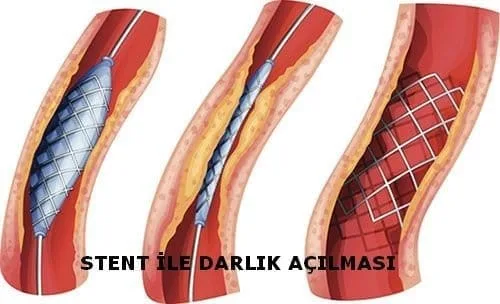
Stent placement is similar to balloon angioplasty. An undeployed stent expands and locks into the vessel wall when the balloon is inflated at the stenotic segment. Once the narrowing is relieved, the procedure is concluded. Stents, along with balloons, are the most commonly used devices for opening occluded arteries or veins. They generally provide better early luminal patency compared to balloons but, unlike balloons, they remain in the body. Stents can stay in the body indefinitely without causing problems. The success rate of balloon and stent procedures ranges from 65% to 99%. Within six months, 20–30% of patients who receive a stent may develop in-stent restenosis. This rate is lower with drug-eluting stents.

Prof. Dr. Özgür Kılıçkesmez is one of Türkiye’s leading interventional radiology and neuroradiology specialists, focusing on minimally invasive endovascular treatments. His primary areas of expertise include aneurysm and stroke treatments, embolization procedures, non-surgical treatments of thyroid and parathyroid diseases, interventional oncology, and peripheral vascular interventions. He currently serves as the Head of the Interventional Radiology and Neuroradiology Department at Istanbul Memorial Göztepe Hospital.
Graduating from Istanbul University Cerrahpaşa Faculty of Medicine in 1997, Prof. Dr. Kılıçkesmez received advanced training in interventional radiology and oncology as a Clinical Fellow at London Guy’s & St Thomas’ and King’s College Hospital between 2012 and 2013. He earned the title of Professor in 2020 and, in the same year, became the Founding Interventional Radiologist at SBÜ Çam and Sakura City Hospital. He also holds the EBIR (European Board of Interventional Radiology) certification.
Prof. Dr. Kılıçkesmez has 94 international and 40 national publications and over 2500 citations. He serves as a reviewer for prestigious journals such as the American Journal of Roentgenology (AJR) and Diagnostic & Interventional Radiology. With his clinical and academic expertise, he is a nationally and internationally recognized authority in stroke treatment, brain aneurysm, embolization, tumor ablation, and minimally invasive treatments of thyroid/parathyroid diseases.





Vaka Örnekleri