


Herniated disc treatment should never be attempted at home due to the high risk of worsening nerve compression and irreversible damage. This condition requires accurate diagnosis and medically supervised interventions to prevent chronic pain, mobility loss, and neurological complications.
Non-surgical herniated disc management methods at home often lead to incorrect applications of heat, exercise, or manipulation techniques. These practices may increase inflammation around spinal nerves, intensify pain severity, and delay necessary clinical treatments that ensure proper recovery.
Safe medical approaches for lumbar disc herniation include physical therapy, pharmacological support, and in some cases minimally invasive procedures. These evidence-based treatments are tailored according to imaging results and patient-specific factors, ensuring controlled and effective healing.
Risks of untreated or improperly treated disc herniation include nerve damage, muscle weakness, and long-term functional impairment. Early medical evaluation and structured care protocols significantly reduce complications and support spinal health preservation.
Why Does My Herniated Disc Pain Sometimes Feel Like It Goes Away on Its Own?
This question opens the door to perhaps the biggest misconception and the most dangerous trap regarding disc herniation. Let’s clarify this confusing situation together. Some lumbar or cervical pains, regardless of the underlying cause, may show a tendency to partially subside within the first 6–8 weeks. Our bodies have a remarkable self-healing capacity, and this process may sometimes kick in and reduce the pain to a tolerable level.
This is exactly where the danger begins. During this period, when your body has entered its natural healing process, you may have tried an odd stretching movement seen in a video, an unconscious massage suggested by a friend, or some kind of “alternative” method with no scientific basis whatsoever. When your pain eases, you naturally attribute this relief to the method you tried. This is a common logical fallacy that can be summarized as “it happened after this, therefore it happened because of this.”
This creates a vicious cycle that convinces both you and your surroundings that a potentially harmful method is effective. Misinformation such as “I boiled that herb and applied it, and the pain stopped instantly” or “My neighbor pulled it once and my hernia went back into place” spreads in this way.
So what is really happening? The method you applied did not treat your hernia; your body’s own healing process simply came into play. The real danger lies in the overlooked point: while you think your pain is gone, the pressure of the hernia on the nerve may still be continuing. This illusion masks the underlying serious problem. Falling into this misconception carries some serious risks:
The dangers of this misconception include:
- Delay in correct diagnosis
- Gradual progression of nerve damage
- Increased risk of permanent numbness or loss of strength
- Spread of ineffective and harmful misinformation
- Reduced chance of effective treatment in the future.
Are Over-the-Counter Painkillers a Safe Solution for Lumbar and Cervical Disc Herniation?
When pain becomes unbearable, the first place we usually reach for is the medicine cabinet. Over-the-counter painkillers may seem to save the day by providing temporary relief. However, this is like covering the engine warning light on your car with black tape and continuing to drive. You ignore the problem, but it continues to grow.
Pain is a distress signal sent by your body. It indicates that something is wrong. When you silence this signal with painkillers, you allow the pressure exerted by the hernia on the nerve to continue and possibly worsen.
Unconscious and long-term use of these medications, although they may seem harmless, can lead to serious health problems. Some possible consequences of improper medication use include:
- Gastric bleeding
- Ulcers
- Impairment of kidney function
- Liver damage
- Physical and psychological dependence (especially with opioid medications)
- Masking of the actual herniated disc problem
Using muscle relaxants, corticosteroids, or strong opioid medications that were previously prescribed by a doctor for another condition and left at home, on your own initiative, is an even greater risk. The fundamental flaw of these drugs is that they never treat the mechanical pressure of the hernia on the nerve—that is, the source of the problem. All they do is silence the alarm. Silencing the alarm does not extinguish the fire. Delaying proper treatment increases the risk of permanent nerve damage and unfortunately reduces the success rate of future treatments.
Does Visiting “Bone Crackers” or People Who Claim to “Pull the Hernia” Help in Hernia Treatment?
Desperation can sometimes lead people down unscientific and dangerous paths. Many individuals suffering from lumbar or cervical pain place their hopes in people who claim to apply methods such as “cracking,” “pulling,” or “putting it back in place.” When performed by unprofessional hands, such practices can turn into a game of Russian roulette for your spine.
It is very important to understand why these methods do not work and why they are dangerous. A hernia is not a bone that has slipped out of place. It is a tear in the outer layer of the cushion (disc) between the vertebrae, with the gel-like inner material protruding outward and compressing the nerve. In other words, the problem is a torn and structurally damaged tissue. No “pulling” or “cracking” movement can repair a torn disc or “put it back into place.”
So why do some people feel temporary relief after such a procedure? The reason is the momentary relaxation of surrounding muscles that have gone into spasm—meaning excessive contraction—in response to the hernia. This temporary relief creates the illusion for the patient that the real problem has been solved. However, this does not address the root of the problem; it merely suppresses one of the symptoms temporarily.
The other, darker side of the coin is the serious risks these procedures carry. Allowing someone who does not know what they are intervening on, does not use imaging guidance, and applies uncontrolled force to touch your spine can result in irreversible consequences.
Some scientifically proven risks include:
- Further enlargement or rupture of the existing hernia
- Permanent damage to the nerve root
- Permanent numbness and loss of strength
- Tearing of neck arteries (vertebral artery dissection)
- Stroke (paralysis)
- Ligament laxity supporting the spine and chronic instability
Especially unconscious interventions applied to the cervical region can create life-threatening situations by damaging the vessels that carry blood to the brain. The “cracking” sound that you perceive as relief is not the sound of bones returning to their place, but merely the release of gas within the joint. Please do not risk your health with such unproven and dangerous methods.
Where Does the Path to Proper Hernia Treatment Begin?
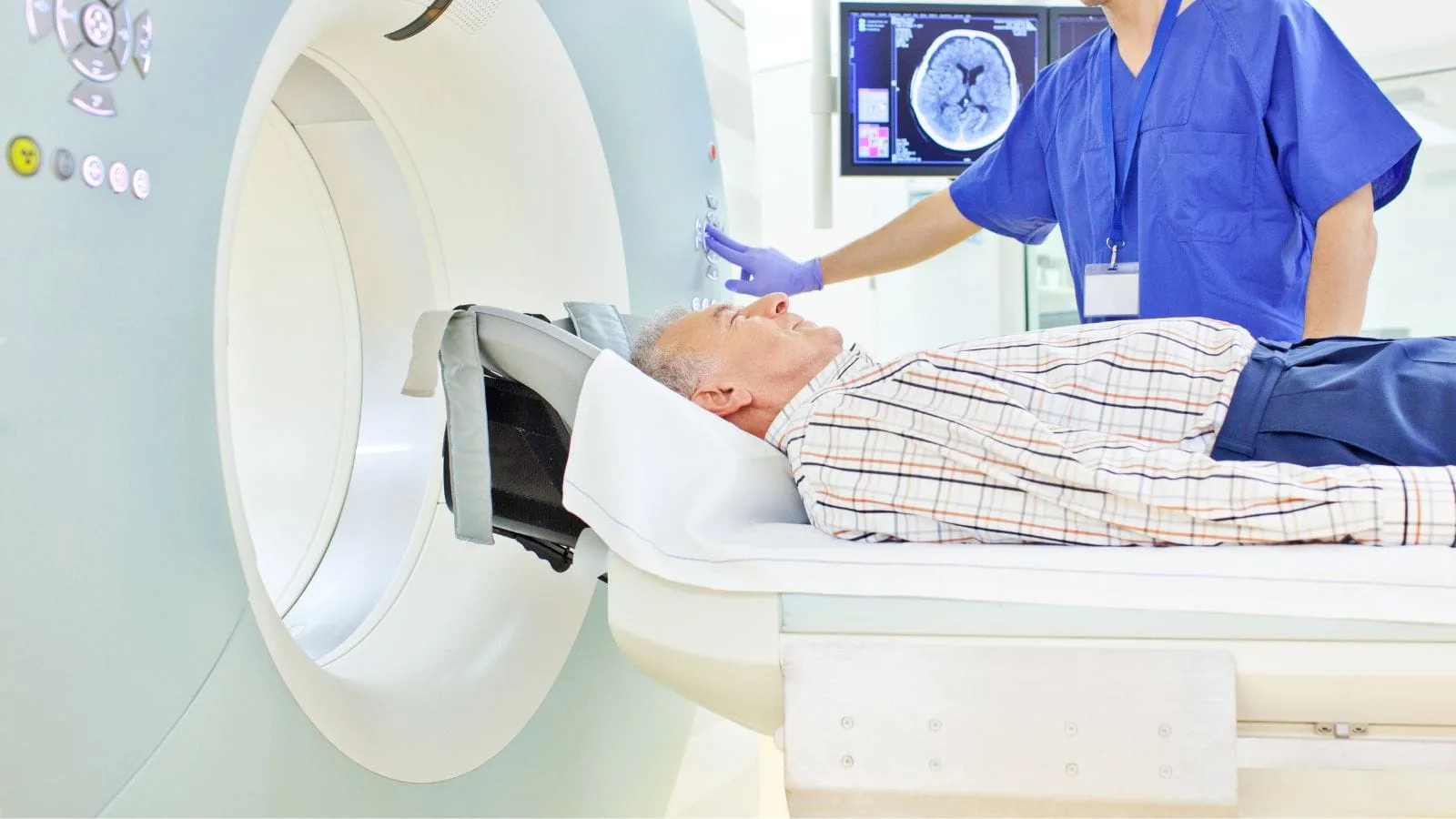
The first and most important step of effective, safe, and lasting hernia treatment is an accurate and complete diagnosis. The basic principle is extremely simple: if you cannot see what you are treating, what you are doing is nothing more than a blind effort. This is exactly where the interventional radiologist’s approach begins. Before proceeding with treatment, we clearly map the source, location, and size of the problem using advanced imaging technologies.
This diagnostic process is actually just as important as the treatment itself. It not only names the problem but also draws a roadmap that determines which treatment will be the most appropriate, effective, and safe for you. For example, when you present with pain radiating from your lower back to your leg, the cause of this pain may be a hernia, but it could also be spinal canal stenosis or facet joint osteoarthritis. The treatment of these three different conditions is completely different from one another.
To make this distinction, the interventional radiologist utilizes the powerful tools offered by modern medicine. The main technological aids we use in the diagnostic process are:
- Magnetic Resonance Imaging (MRI): It is the gold standard for visualizing soft tissues such as discs and nerves. It shows, with photographic clarity, which nerve the hernia is compressing and to what extent.
- Computed Tomography (CT): Allows us to examine bone structures and calcifications in detail.
- Myelography: A special X-ray technique performed by injecting a contrast agent into the spinal canal, clearly demonstrating pressure on the nerves.
- Discography: A sensitive diagnostic method performed by injecting contrast material directly into the disc to confirm whether the pain is definitively originating from the suspected disc.
As a result of this detailed evaluation, if it is determined, for example, that your hernia has not yet ruptured (contained) and is suitable for disc reduction treatments, non-surgical methods come to the forefront for you. However, if your hernia has fragmented and spilled into the canal, we direct you to a different and more effective treatment, protecting you from an intervention that would fail. Remember, correct diagnosis is half of successful treatment.
Is a Non-Surgical Hernia Solution Possible and What Are Modern Treatment Methods?
Yes, it is absolutely possible. Today, in the treatment of lumbar and cervical disc herniations, there are highly effective modern and minimally invasive methods that do not require large surgical incisions, general anesthesia, or long recovery periods. This is where interventional radiology comes into play. By creating only a needle-sized entry in the skin and reaching the source of the problem directly under imaging guidance, these methods offer revolutionary advantages for patients.
We can basically examine these modern treatments in three main groups:
Targeted Injections (Precision-Guided Injections)
The aim of this method is to extinguish the chemical inflammation—namely edema and inflammation—created by the hernia around the nerve. A herniated disc not only compresses the nerve mechanically but also causes severe pain by releasing nerve-irritating chemicals into the surrounding area. In these injections, we reach this problematic area directly with a very fine needle under the guidance of an imaging device such as fluoroscopy (a type of real-time X-ray) or ultrasound. Then, we inject a combination of cortisone, a powerful anti-inflammatory medication, and a local anesthetic that provides immediate pain relief.
The goals of this procedure are:
- Rapidly suppress inflammation around the nerve
- Relieve severe pain
- Break the vicious cycle of pain–muscle spasm
- Enable the patient to become capable of physical therapy and exercise
These injections can provide relief lasting for months, sometimes even years, and can be an important step on the path to avoiding surgery.
Disc-Reducing Treatments (Percutaneous Disc Decompression)
The basic principle of all methods under this heading is the same: by reducing the pressure inside the herniated disc, allowing the protruding hernia bulge to deflate and retract. This eliminates pressure on the nerve. These methods are based on a mechanical principle that directly addresses the problem at its source.
The main modern treatment methods in this group are:
- Ozone Therapy (Chemonucleolysis): One of the most outstanding methods in terms of safety and effectiveness. Under imaging guidance, a special needle is inserted into the disc and medical ozone gas is administered. Ozone reduces the water content of the disc, causing it to shrink, eliminates inflammation with its powerful anti-inflammatory effect, and activates the body’s own repair mechanisms. The success rate is over 85%, while the complication risk is less than one in a thousand.
- Radiofrequency Ablation (RFA): Controlled heat energy is delivered via a thin electrode placed inside the disc, vaporizing and shrinking part of the disc tissue. This reduces intradiscal pressure and shrinks the hernia.
- Laser Disc Treatment (PLDD): Similar in principle to RFA, but uses laser energy as the heat source. However, some scientific studies have shown that this method may have a higher rate of re-herniation in the long term compared to some other techniques. Therefore, patient selection is very important.
Camera-Assisted Hernia Treatment (Percutaneous Endoscopic Discectomy – PECD/PELD)
This method is literally “keyhole surgery.” Through an approximately 1-centimeter incision in the skin, a very thin instrument with a high-resolution camera at its tip (endoscope) is advanced to the site of the hernia. The surgeon clearly sees the nerve and the hernia on the screen and removes the herniated fragment compressing the nerve using micro-scissors and graspers, just like in open surgery.
This method combines the effectiveness of open surgery with the comfort of a minimally invasive approach. Since muscles and bones are not cut, recovery is very rapid, and patients are usually discharged on the same day.
What Is the Difference Between These New Methods and Traditional Open Hernia Surgery?
This is one of the issues patients are most curious about and struggle with most when making a decision. Let’s answer the questions “Why not just have open surgery?” or “Are these new methods really as effective as surgery?” by comparing them based on the criteria that matter most to you.
Advantages of Interventional Methods (Ozone, PECD, etc.)
- Usually performed as a day procedure (in and out the same day)
- Return to work and normal life within a very short time (1–3 weeks)
- No surgical incision (needle entry) or less than 1 cm
- Minimal risk of infection and bleeding
- No need for general anesthesia (local anesthesia and sedation are sufficient)
- Preservation of the spine’s natural structure and mobility
- Lower overall cost.
Status of Traditional Open/Microdiscectomy Surgery
- Usually requires 1–3 days of hospitalization
- Return to work and normal life takes 4–6 weeks or longer
- Larger surgical incision (3–5 cm or more)
- Higher risk of infection, bleeding, and wound complications
- Mandatory general anesthesia
- Especially in cervical hernia, risk of fusion (screws) that stabilizes vertebrae and restricts movement
- Higher overall cost.
Frequently Asked Questions
Why should you never try herniated disc treatment at home without medical supervision?
What are the dangers of using home remedies for a herniated disc without professional guidance?
Which herniated disc symptoms require immediate medical attention instead of home treatment?
Can incorrect exercises make a herniated disc worse at home?
Why is an accurate diagnosis important before starting herniated disc treatment?
What treatment options are available when home remedies are not enough for a herniated disc?
How can delaying professional treatment affect recovery from a herniated disc?
Are online herniated disc treatment methods safe for everyone to follow at home?
What experiences do patients commonly report after receiving professional herniated disc treatment?
How can patients safely support recovery from a herniated disc alongside medical treatment?

Prof. Dr. Özgür Kılıçkesmez is one of Türkiye’s leading interventional radiology and neuroradiology specialists, focusing on minimally invasive endovascular treatments. His primary areas of expertise include aneurysm and stroke treatments, embolization procedures, non-surgical treatments of thyroid and parathyroid diseases, interventional oncology, and peripheral vascular interventions. He currently serves as the Head of the Interventional Radiology and Neuroradiology Department at Istanbul Memorial Göztepe Hospital.
Graduating from Istanbul University Cerrahpaşa Faculty of Medicine in 1997, Prof. Dr. Kılıçkesmez received advanced training in interventional radiology and oncology as a Clinical Fellow at London Guy’s & St Thomas’ and King’s College Hospital between 2012 and 2013. He earned the title of Professor in 2020 and, in the same year, became the Founding Interventional Radiologist at SBÜ Çam and Sakura City Hospital. He also holds the EBIR (European Board of Interventional Radiology) certification.
Prof. Dr. Kılıçkesmez has 94 international and 40 national publications and over 2500 citations. He serves as a reviewer for prestigious journals such as the American Journal of Roentgenology (AJR) and Diagnostic & Interventional Radiology. With his clinical and academic expertise, he is a nationally and internationally recognized authority in stroke treatment, brain aneurysm, embolization, tumor ablation, and minimally invasive treatments of thyroid/parathyroid diseases.






Vaka Örnekleri